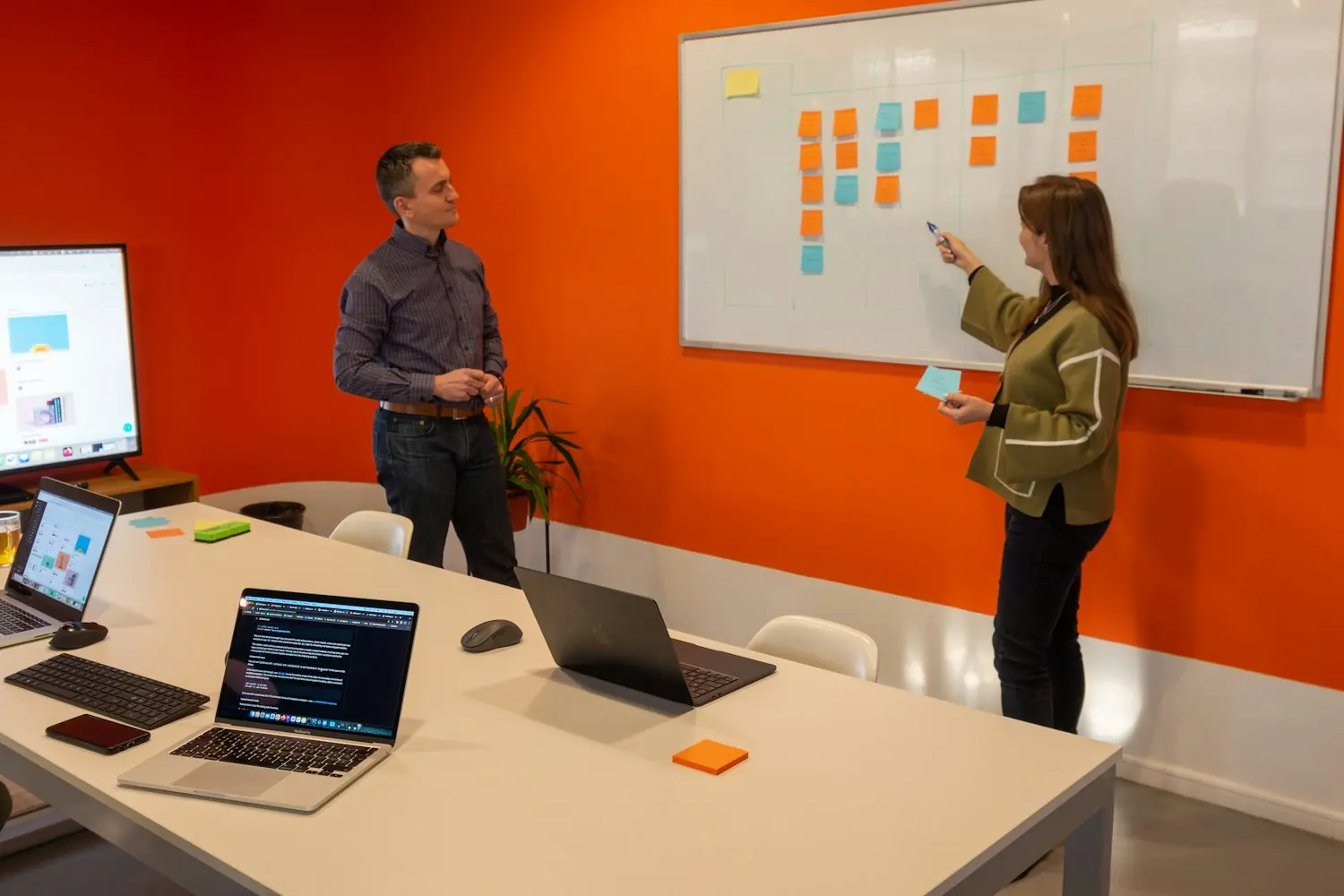
Common stages
- Intro conversation. Background, motivation and what you want next.
- Technical conversation. A walk through your past work and decisions.
- Coding or problem-solving exercise. Live, pair-based, or a take-home task.
- System or design discussion. More common for experienced roles.
- Team and values conversation. How you work with others.
Smaller companies may combine stages. Scaleups often run each as a separate round.
Prepare for the conversation about your work
Interviewers often ask about something you have built. Choose two or three projects and be ready to explain:
- the problem and who it was for
- the options you considered and why you chose one
- what went wrong and what you changed
- how you knew it worked
Use the STAR method: situation, task, action, result. Keep answers short, and expect follow-up questions.
Prepare for the coding exercise
- Ask the format and the language or tools allowed.
- Practise solving problems out loud, because explaining your thinking is usually part of the assessment.
- Start with a simple working solution, then improve it.
- Ask clarifying questions before you begin.
- Test your solution and say what you would test next.
Take-home tasks
Ask how long you are expected to spend and what is being assessed. Keep a short note of assumptions and what you would do with more time. A reasonable task should not require large amounts of unpaid work.
Design discussions
Pick a system you know well and explain its parts, what could fail and what you would change. Name trade-offs rather than claiming one right answer.
Questions to ask them
- What does the team ship, and how often?
- How do you review code and handle incidents?
- How are priorities decided?
- What would the first project be?
- How does the team learn and grow?
Before the day
Follow the basics: read the job description, research the company, review your CV and prepare examples. For online interviews, check your connection and set up early.
An employer example, then a practice plan
Backend hiring processes at technology companies can include conversations about experience, a take-home or pair-coding exercise, systems design and behavioural work. Its staff-plus explanation also covers impact and leadership. These are examples of one employer's published process, not a standard every startup follows.
Before preparing, ask which parts apply to this role, the expected time and what tools or AI assistance are permitted. Then practise with a small problem you understand:
- Clarify the input, output and edge cases before coding.
- Explain a simple working approach before optimising.
- Test the behaviour that matters, including failure cases.
- Describe one trade-off and what you would revisit with more time.
For systems design, clarify the workload and failure requirements before choosing components. Use a project you can discuss without disclosing employer code or confidential architecture. These are practice prompts, not claimed interview questions.
Next steps
Read our general startup interview guide and our research guide. Browse engineering roles on the jobs page.
FAQ
What is a typical startup engineering interview process?
It varies. Many include an intro call, a technical conversation, a coding or take-home task and a team conversation. Ask the company for its stages.
Should I do a take-home task?
It is reasonable to ask how long it should take and what is being assessed before you agree. If the time asked seems excessive, say so politely.
How do I prepare for live coding?
Practise talking through your approach while you solve problems, ask clarifying questions and test your answer. Aim to make both your reasoning and the code easy to assess; ask how this employer weighs them.
What if I do not know the answer?
Say what you do know, explain how you would find out and show your reasoning. Interviewers often care about how you approach unfamiliar problems.
How is a scaleup interview different?
Scaleups often have more structured stages, panels and set criteria. Earlier-stage startups often use fewer, less formal rounds.
Related reading
- how startup interviews work
- how to research a startup or scaleup
- startup vs scaleup
- how to tailor your CV to a startup role